
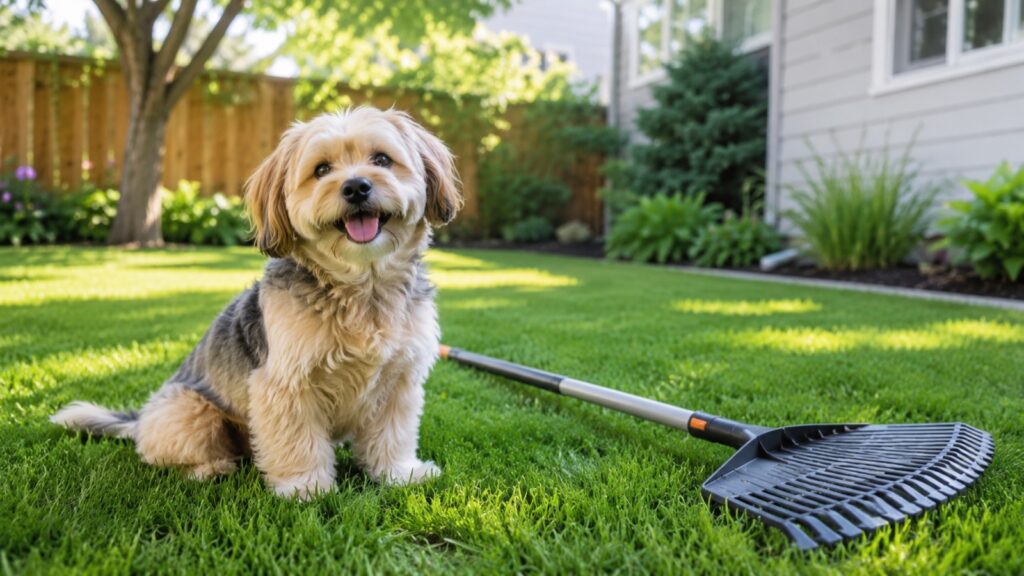
Ask a veterinarian what single change would most improve the average American dog’s life and the answer is rarely exotic: a consistent daily walk. Yet surveys keep finding that nearly half of dog owners do not walk their dogs regularly. The problem usually is not laziness — it is that new routines collapse when they start too ambitious. What follows is a thirty-day progression designed the way habit researchers suggest: start almost embarrassingly small, attach the walk to things you already do, and let the streak build its own momentum.
Before Day One: Set Up for Zero Friction
Every abandoned walking routine dies at the front door, in the three minutes of hunting for the leash, the bags, and the other shoe. Eliminate that search entirely. Mount two hooks by the door — one for the leash, one for a small kit with waste bags, a clip-on light, and treats. Owners who carry gear for longer outings often organize everything into a heavy duty tool bag style carrier that lives on the same hook, so grabbing it on the way out requires no thought at all. When leaving takes thirty seconds, the hardest part of the walk is already done.
Week One: The Ten-Minute Contract
For the first seven days, your only commitment is ten minutes, once a day, at the same trigger point — right after your morning coffee, or the moment you get home from work. Not twenty minutes on nice days and zero on busy ones. Ten, every day, rain or shine. The distance is irrelevant; you are not training the dog yet, you are training the habit. By day five, most owners notice their dog begins waiting at the door at the trigger time. That is the routine taking root in both of you.
Week Two: Add Structure to the Walk Itself
Now that showing up is automatic, shape what happens on the leash. Split each outing into two halves: a “business” segment where the dog is free to sniff and eliminate, and a “walking” segment with a purposeful pace and slack leash. Dogs learn the pattern fast, which pays off doubly. Sniffing time is genuine mental enrichment — a ten-minute sniff-heavy walk tires a dog more than twenty minutes of brisk marching — and a predictable elimination window means you are never surprised without a bag. This is also the week to extend to fifteen minutes.
Week Three: Vary the Route, Keep the Ritual
Habit science has a paradox at its center: the trigger and time must stay fixed, but the content should vary to stay rewarding. Keep your departure ritual identical and start rotating three routes — the short loop for rough days, the standard route, and a longer weekend wander. New streets mean new smells, and new smells are the canine equivalent of fresh reading material. Week three is also when neighborhood courtesy becomes real: you will meet the same people daily, so pick up every single time, give leashed dogs space, and yield the sidewalk to strollers. Reputation compounds on a walking route.
Week Four: Lock In the Support Systems
The final week is about protecting the habit from the things that eventually attack it: weather, darkness, travel, and yard duty piling up at home. Owners who last for years all build small backstops.
- A foul-weather minimum: five minutes around the block still counts and keeps the streak alive.
- A visibility kit: reflective leash and a clip light make winter evening walks feel routine instead of risky.
- A backup human: a family member, neighbor, or dog walker who covers your trigger time when life intervenes.
- A yard reset that stays easy: a walking habit reduces yard mess but never eliminates it, and letting the backyard slide undoes your hygiene gains. A Pooper Scooper with Bag kept by the back door makes the twice-weekly yard sweep a two-minute task instead of a dreaded chore, so the whole system — walks plus yard — stays effortless.
Weekend Upgrades: When Ten Minutes Becomes an Hour
Once the daily minimum is bulletproof, weekends become the place to add richness without risking the streak. Saturday can host the “adventure walk” — a drive to a new trailhead, a river path, or a quiet downtown street for socialization reps. Sunday works well as the training walk, where you practice heel work, sits at curbs, and calm greetings with the distractions the weekday loop never provides. Two cautions keep the upgrades sustainable. First, scale distance to your dog’s condition: a couch-adapted adult dog should build mileage as gradually as a couch-adapted human, adding no more than ten to fifteen percent per week. Second, never let the big weekend outing become an excuse to skip Monday. The daily minimum is the foundation; the weekend is decoration. Protect the foundation first, always, and the decorations take care of themselves.
What Changes After Thirty Days
The physical results show up first in the dog: better weight, calmer evenings, fewer destructive episodes born of boredom. Trainers estimate a large share of the behavior problems they see trace back to under-exercised dogs, and the daily walk is the cheapest treatment ever invented. The owner’s results are quieter but real — the walk becomes the day’s built-in decompression, and skipping it starts to feel like forgetting to brush your teeth. That flip, from obligation to default, is the whole point of the thirty-day structure.
Troubleshooting the Common Stalls
If the dog pulls relentlessly, shorten the walking segment and reward slack-leash steps generously; loose-leash skills grow from repetition, not equipment. If your own motivation dips around week two — it almost always does — reduce the commitment back to ten minutes rather than skipping a day, because a small streak intact beats a big streak broken. And if you genuinely cannot cover the trigger time some season of life, hire it out without guilt. Finding good help is a skill of its own; the same diligence people apply to choosing trusted professionals for their kids’ education applies to choosing the person who holds your dog’s leash.
The Streak Is the Strategy
Thirty days from now, the goal is not a fitter dog, although you will have one. The goal is a household where the walk happens the way dinner happens — automatically, at a known time, with the gear where it belongs and the routine carrying you both out the door. Start with ten minutes tomorrow at a time you already know, and let the streak do the heavy lifting.