
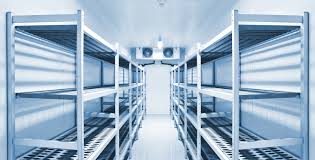
In the global economy of frozen foods, pharmaceuticals, and long-term preservation, few technologies are as critical as Frozen Storage. Unlike chilled storage, which merely slows bacterial growth, frozen storage halts it almost entirely by reducing product temperature to -18°C or lower. At these temperatures, water turns to ice, microbial activity ceases, enzymatic reactions become negligible, and products can remain safe and nutritious for months or even years.
Frozen storage is the engine behind the multi-billion-dollar frozen food industry, enabling consumers to enjoy ice cream on a hot summer day, restaurants to serve frozen French fries, and hospitals to store frozen plasma and tissue samples. This comprehensive guide explores the specialized frozen storage requirements in Riyadh and across the Kingdom, demonstrating why professional frozen storage is critical for business success in Saudi Arabia’s challenging climate.
Frozen Storage: Understanding the Science and Requirements
Frozen Storage is fundamentally different from other forms of temperature-controlled warehousing. At -18°C or lower, biological activity ceases almost entirely, allowing products to be preserved for months or even years without significant quality degradation. The key to successful frozen storage lies in temperature stability and rapid initial freezing.
The Saudi Food and Drug Authority (SFDA) enforces stringent regulations for the storage of frozen products, requiring consistent temperatures below -18°C during transportation and storage to maintain product safety . This regulatory framework ensures that businesses maintain the highest standards of cold chain integrity.
Temperature Stability is Critical
Fluctuations cause “freezer burn,” where surface moisture sublimates directly into vapor, leaving dry, discolored patches on food. A quality frozen storage facility maintains temperature variance within ±1°C, never exceeding -18°C even during door openings or product loading. This requires sophisticated refrigeration systems, high-performance insulation, and strict operational protocols.
Specialized Construction
Frozen storage requires specialized construction. Standard concrete floors can crack under freeze-thaw cycles, so facilities use air-entrained concrete with underfloor heating systems to prevent ground frost heave. Insulation thickness typically exceeds 150mm, often using polyurethane panels with vapor-tight seals. Humidity control is equally important—excess moisture in a frozen facility leads to ice buildup on evaporator coils, reducing efficiency and creating slipping hazards.
Temperature Zones for Different Products
Different products require different temperature ranges. Units offers multiple temperature zones: -18°C to -20°C for general frozen goods (meat, poultry, vegetables), -22°C to -30°C for ice cream and premium frozen desserts, and specialized zones for pharmaceutical applications such as -20°C and -80°C storage for biologics, vaccines, and cell therapies . Units’ frozen warehouses are designed to meet SFDA standards and feature precisely calibrated temperatures, strict humidity control, and 24/7 security monitoring.
Frozen Storage in Riyadh: Overcoming the Capital’s Extreme Heat
Riyadh, the capital and commercial heart of Saudi Arabia, presents a unique set of challenges for Frozen Storage in Riyadh. The city experiences extreme summer temperatures that regularly exceed 45°C, with asphalt and concrete surfaces radiating heat well above 60°C. This extreme thermal gradient—a difference of nearly 65°C between outside air and the frozen storage interior—places enormous stress on refrigeration systems, insulation, and building envelopes.
Engineering Solutions for Riyadh’s Climate
Professional frozen storage facilities in Riyadh employ multiple engineering strategies to overcome these challenges. Every time a delivery truck door opens, warm, humid air rushes in, creating immediate condensation that can quickly turn to ice on floors, racks, and evaporators. Consequently, Riyadh facilities require significantly larger refrigeration capacities than their European or North American counterparts, often double or triple the compressor power per cubic meter.
Insulation Requirements: Facilities in Riyadh use 150mm to 200mm of high-density polyurethane insulation—significantly thicker than the 100mm standard in cooler climates. This insulation must be carefully installed with vapor-tight seals to prevent moisture infiltration that can degrade performance over time.
Door Technology: Rapid-roll insulated doors that open and close in under five seconds are essential, minimizing cold air loss during loading and unloading. High-velocity air curtains at all entry points further reduce thermal exchange, blowing a stream of air across the doorway to create an invisible barrier between the frozen interior and the hot exterior.
Redundant Refrigeration: Given the extreme external temperatures, a single refrigeration failure can be catastrophic. Professional Riyadh facilities install redundant systems—two or more complete refrigeration units that automatically take over if the primary system fails. Backup generators with on-site fuel reserves for 72+ hours of continuous operation are mandatory.
Energy Optimization: Energy accounts for 25-35% of cold storage operational expenditure, with HVAC alone consuming up to 65% of facility electricity in peak summer months . Advanced facilities are adopting AI/ML-enabled energy-optimization systems that can cut refrigeration energy use by 20% .
Real-Time Monitoring: Continuous temperature monitoring with automated alerts is non-negotiable. Sensors placed throughout the storage zone report to a central system that triggers alarms (via SMS, email, or dashboard) if temperatures deviate from specifications.
The Riyadh Market Demand
Riyadh’s booming population has fueled an explosion in frozen food consumption. Major supermarket chains operate dozens of branches across the city, each requiring daily or weekly frozen deliveries. The restaurant industry depends on reliable frozen storage for everything from french fries to imported beef.
The healthcare sector, with major medical cities like King Fahd Medical City and King Saud Medical City, requires frozen storage for plasma, certain medications, and laboratory samples. In a significant development, AJEX has opened Saudi Arabia’s first GMP-GxP certified logistics depot in Riyadh, featuring a dedicated -20°C chamber for frozen products such as cell therapies and biologics, filling a critical gap in the Kingdom’s life sciences supply chain .
Frozen Storage in Saudi Arabia: A National Perspective
When we expand our view to the national level, the landscape of Frozen Storage in Saudi Arabia reveals a sector undergoing rapid transformation driven by Vision 2030’s food security and logistics development goals. The cold storage market in Saudi Arabia is expected to reach a projected revenue of US$ 6,251.9 million by 2033, growing at a CAGR of 11.7% . The cold chain logistics segment specifically is projected to reach USD 2.76 billion by 2031, reflecting a 4.12% CAGR .
Market Drivers Under Vision 2030
The growth trajectory mirrors Vision 2030’s goal of economic diversification, which frames cold chain infrastructure as a cornerstone for safeguarding food security, modernizing healthcare distribution, and deepening regional trade integration .
Food Security Initiatives: Government targets, such as achieving 80% poultry self-sufficiency by 2025, compel investment in temperature-controlled networks that can handle 950,000 metric tons of chicken production and simultaneously support imported protein flows .
Infrastructure Investment: The government has earmarked USD 133 billion for logistics infrastructure development, including 59 logistics centers spanning 100 million m² to be delivered by 2030. Twenty-one of these centers are already in execution . Key developments include a $267 million integrated logistics zone at King Abdulaziz Port in Dammam, which includes modern cold store capabilities .
Pharmaceutical Sector Growth: The pharmaceutical cold chain segment is growing at a 5.40% CAGR, outstripping overall market growth . SFDA’s Breakthrough Medicine Program compels logistics firms to meet Good Distribution Practices (GDP) standards, spurring significant investment in specialized infrastructure.
Regional Infrastructure Developments
Jeddah: NAQEL Express has invested SAR 200 million (USD 53.25 million) in a Jeddah warehouse featuring multi-temperature zones dedicated to biologics and vaccines . The facility supports the growing demand for compliant temperature-controlled storage and distribution in the western region.
Dammam: Saudi Global Ports has signed an agreement to establish an approximately 1 million square metre integrated logistics zone at King Abdulaziz Port Dammam, incorporating modern cold store capabilities . This development strengthens the Eastern Province’s position as a logistics gateway.
Riyadh: AJEX has opened a purpose-built 3,000 square meter GMP-GxP certified facility in Riyadh with multiple temperature-controlled zones, including a dedicated -20°C frozen storage chamber .
Units: Your Trusted Partner for Frozen Storage Across Saudi Arabia
When your business demands frozen storage that is reliable, compliant, and strategically located, one company leads the market across Saudi Arabia: Units. As the top company for frozen storage solutions, Units operates state-of-the-art facilities in Riyadh, Jeddah, and Dammam, serving importers, distributors, supermarkets, restaurants, and healthcare providers across the Kingdom.
Specialized Frozen Storage Capabilities
Units offers specialized freezing warehouses with consistently low temperatures, ideal for high-sensitivity goods such as frozen meats, poultry, seafood, ready-to-eat meals, ice cream, butter, frozen dairy, frozen vegetables and fruits, dough, and bakery items. Key features include:
- Precisely calibrated temperatures ranging from -18°C to -30°C, with the capability to support specialized pharmaceutical storage requirements
- SFDA-compliant design ensuring regulatory adherence for food and pharmaceutical products
- Strict humidity and airflow control to prevent freezer burn and maintain product quality
- 24/7 security monitoring and camera surveillance
- Redundant refrigeration systems with automatic backup to ensure continuous operation
Multi-Temperature Ecosystem
Units provides an integrated ecosystem allowing businesses to co-locate products across different temperature categories within a single facility—frozen, chilled, and ambient—a significant logistical and cost advantage.
Smart Monitoring and Digital Control
Units provides an all-in-one digital platform that empowers customers to manage logistics operations easily through an intuitive dashboard. Clients can track inventory in real time, monitor temperature conditions continuously, simplify inbound and outbound processes, conduct audits, and generate reports instantly. The system integrates real-time sensors and digital tracking platforms to ensure temperature stability throughout the storage process .
Strategic Locations
Units serves clients across the Kingdom with facilities in Riyadh, Jeddah, and Dammam, with active expansion to other cities. All locations provide easy access to major transportation hubs, ports, and industrial zones, ensuring efficient distribution across the Kingdom’s logistics corridors .
Don’t let the extreme Saudi climate compromise your frozen products. Whether you need -18°C for general frozen goods, -22°C for ice cream, or specialized temperature zones for pharmaceuticals, Units delivers the precision, security, and expertise your business demands. Visit units.sa today to schedule a facility tour, request a customized quote, or speak directly with one of their frozen storage specialists.
Conclusion
Frozen storage is the silent hero of modern food and pharmaceutical supply chains, aligned with Saudi Vision 2030’s food security and healthcare objectives. Frozen Storage halts biological decay, preserves nutritional value, and extends shelf life from days to years.
In Frozen Storage in Riyadh, the extreme desert climate demands engineering excellence—enlarged condensers, redundant systems, advanced insulation, and AI-driven energy optimization—while specialized facilities now support -20°C storage for biologics and cell therapies .
Across Frozen Storage in Saudi Arabia, the market is projected to reach USD 6.25 billion by 2033 , driven by:
- USD 133 billion in logistics infrastructure investment
- 4.12% CAGR in cold chain logistics through 2031
- Government poultry self-sufficiency targets requiring expanded cold storage capacity
- Pharmaceutical cold chain growing at 5.40% CAGR
Units stands as the top company, offering SFDA-compliant frozen storage with precise temperature control, smart inventory tracking, and 24/7 security monitoring. Do not trust your valuable frozen inventory to substandard warehousing. Visit units.sa today and secure the frozen storage solution your business deserves.
Frequently Asked Questions (FAQs)
1. What temperature range does Units maintain for frozen storage?
Units maintains precisely calibrated temperatures from -18°C to -30°C for frozen storage, with strict humidity and airflow control to prevent freezer burn and preserve product quality. This meets SFDA requirements that frozen products be maintained below -18°C . Units also has the capability to support specialized pharmaceutical storage, including -20°C chambers for biologics and cell therapies .
2. How is the Saudi frozen storage market growing under Vision 2030?
The cold storage market is projected to reach USD 6,251.9 million by 2033, growing at 11.7% CAGR . The government has allocated USD 133 billion for logistics infrastructure, including 59 logistics centers across the Kingdom . Key drivers include food security initiatives (80% poultry self-sufficiency by 2025) and pharmaceutical cold chain growth at 5.40% CAGR .
3. What makes frozen storage in Riyadh different from other regions?
Riyadh’s extreme summer temperatures (exceeding 45°C) create a thermal gradient of nearly 65°C, requiring specialized engineering including redundant refrigeration systems, high-density insulation (150-200mm), rapid-roll insulated doors, AI-driven energy optimization, and 24/7 real-time temperature monitoring .
4. How does Units ensure SFDA compliance for frozen storage?
Units designs its freezer warehouses to meet SFDA standards for food and pharmaceutical storage, incorporating continuous temperature monitoring, digital record-keeping, strict hygiene protocols, and validated storage conditions. Units follows the SFDA’s mandatory requirements for transporting and storing food products, including temperature control based on product type .
5. How can I monitor my frozen products remotely at Units?
Units provides every client with secure 24/7 web portal access to their inventory management platform. The system incorporates real-time sensors that continuously monitor temperature conditions, alerting operators when deviations occur . You can track inventory in real time, conduct audits, generate reports instantly, and monitor storage conditions from anywhere.